Who is NeuroLingo for?
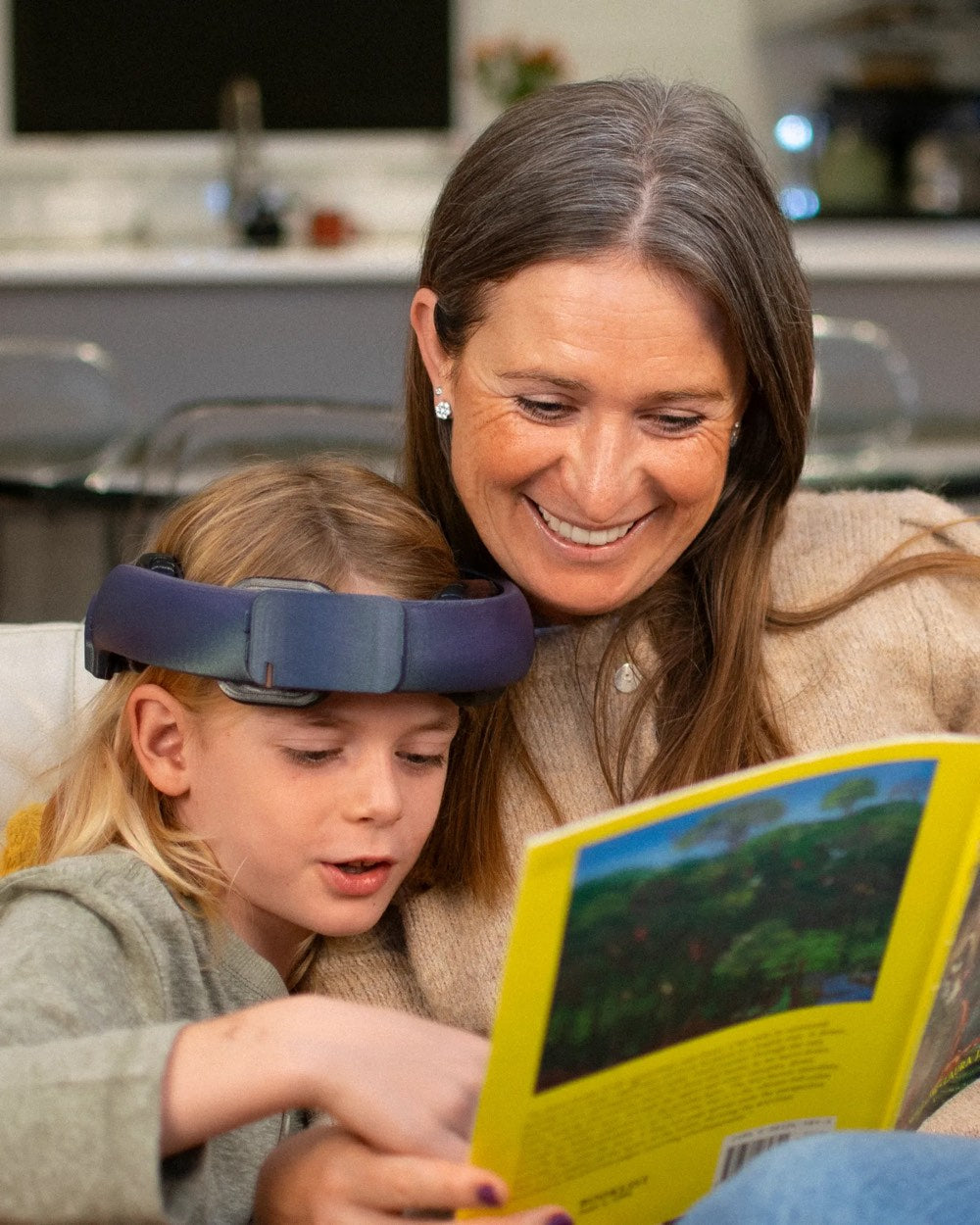
Children ages 6 and up who find reading to be unusually difficult even with regular practice. We designed NeuroLingo for students working with a tutor, an evidence-based reading program at school, or a structured program at home. It is not for children with a history of seizures, metal in the skull, an implanted electronic device, or broken skin above the ears where the pads sit. Talk to your child’s doctor before starting NeuroLingo.
How does it work?
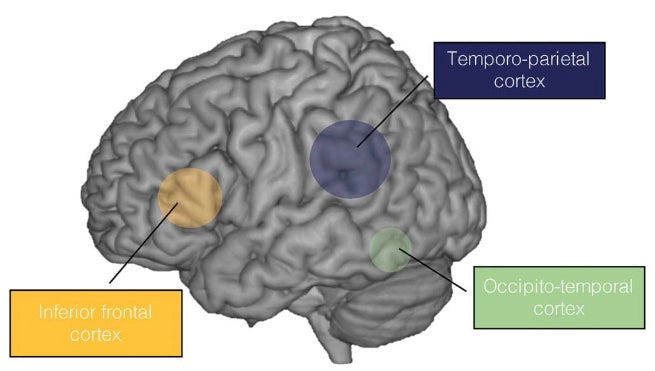
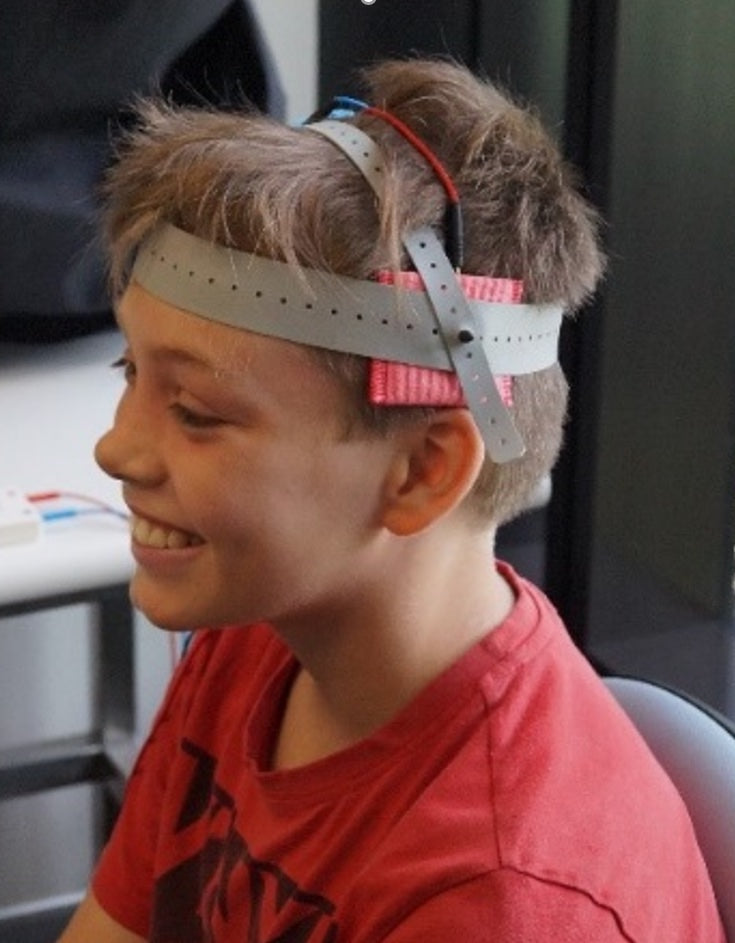
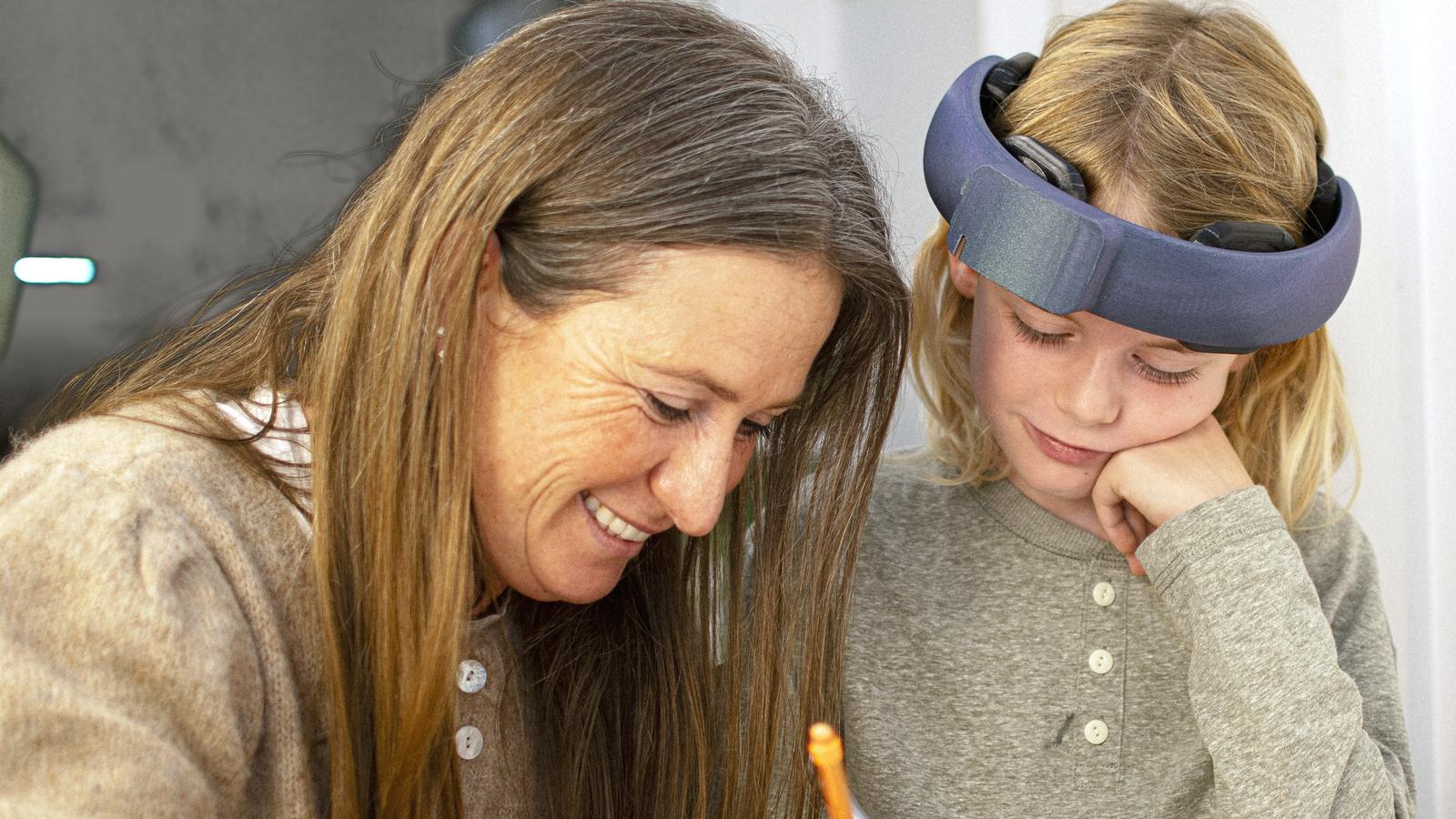
Reading runs on a network on the left side of the brain. In children with dyslexia, those left-side regions are less active, and the right side steps in to compensate. NeuroLingo uses transcranial direct current stimulation, or tDCS, in which a gentle 1.0 mA current passes through two 5 × 5 cm saline pads on the scalp using the exact bilateral montage of the Costanzo group (Costanzo et al. 2016, 2019): the positive pad over the left temporo-parietal reading regions (P7/TP7) and the return pad over the right (P8/TP8). This makes the left reading regions a little more responsive and the right a little less. It also makes the brain better able to rewire while it is on, known as neuroplasticity. Paired with reading practice, that gives the practice more to build on. That is why the headband is worn only during practice.
Does my child need a tutor or a program?
YES. Regular practice for reading is the foundation to real advancement for struggling students. NeuroLingo is worn during reading practice and does not teach reading on its own. We designed our headband to assist the literacy training you are already doing. A tutor, a school program, at-home practice, or a structured program like Orton-Gillingham or Lindamood-Bell all count.
How much time does it take?
Three 20-minute sessions a week, during the decoding, reading, and phonological awareness practice your child already does.
What ages?
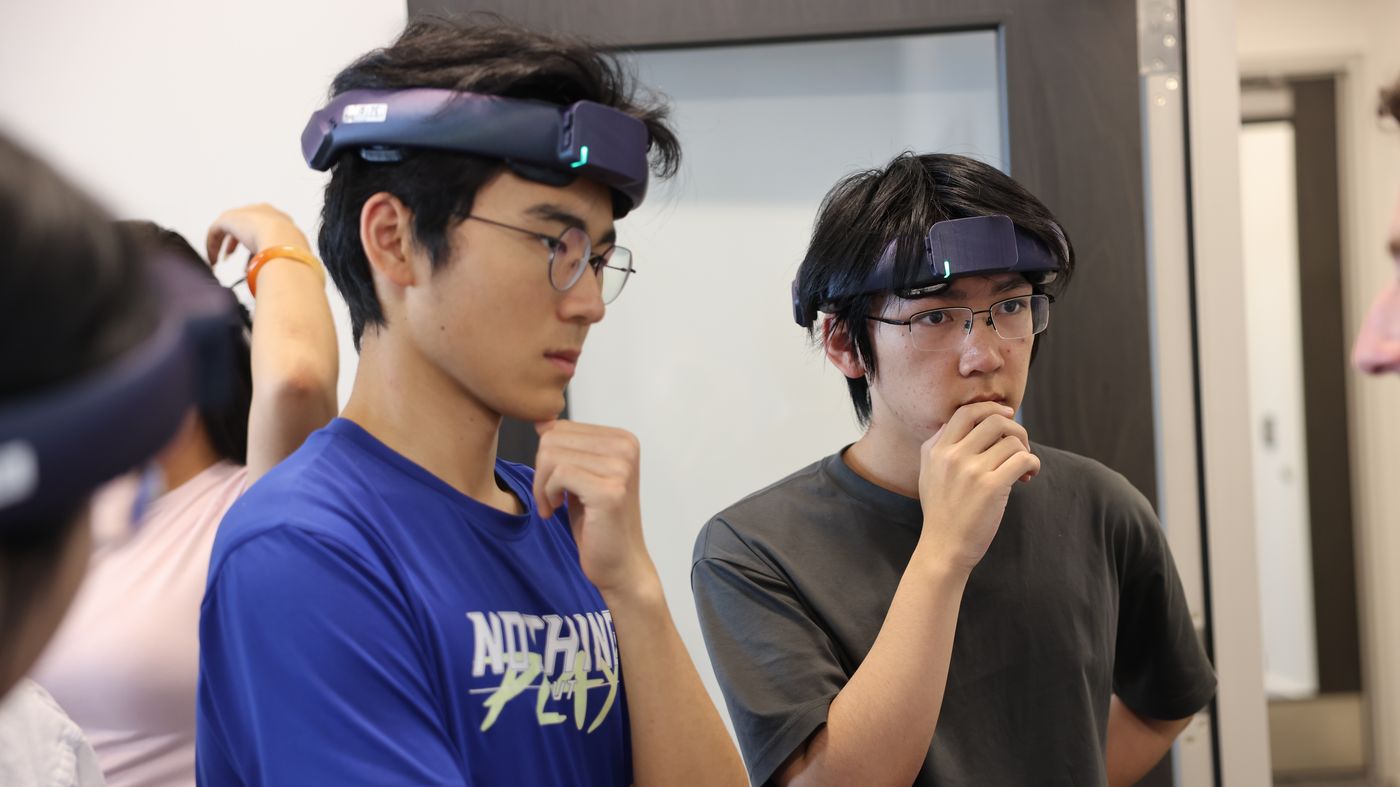
NeuroLingo is designed for ages 6 and up, from early grade school through adulthood. We start at age 6 because first grade is when formal phonics and decoding instruction begins and when early reading support has the strongest impact (Lovett et al. 2017), with the youngest tDCS studies testing elementary-school children around ages 7 to 9 (Oliaee et al. 2022; Mirahadi et al. 2023, which paired tDCS with phonological awareness training). For children under 6, we recommend waiting. And it is never too late for older kids or teens: most of the 11 pediatric reading studies tested ages 8 to 18 (including Costanzo et al. 2016 and Battisti et al. 2022), and trials in college students and adults also showed faster reading after just five sessions (Heth & Lavidor 2015). We size each headband to the wearer’s head after ordering, so it fits elementary-schoolers, teens, and adults alike.
How does the published research relate to your ongoing trials?
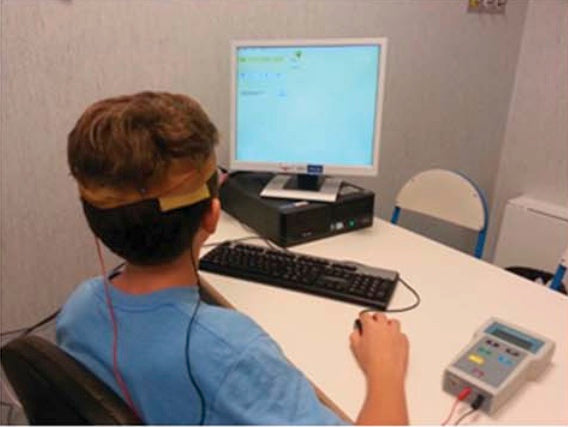
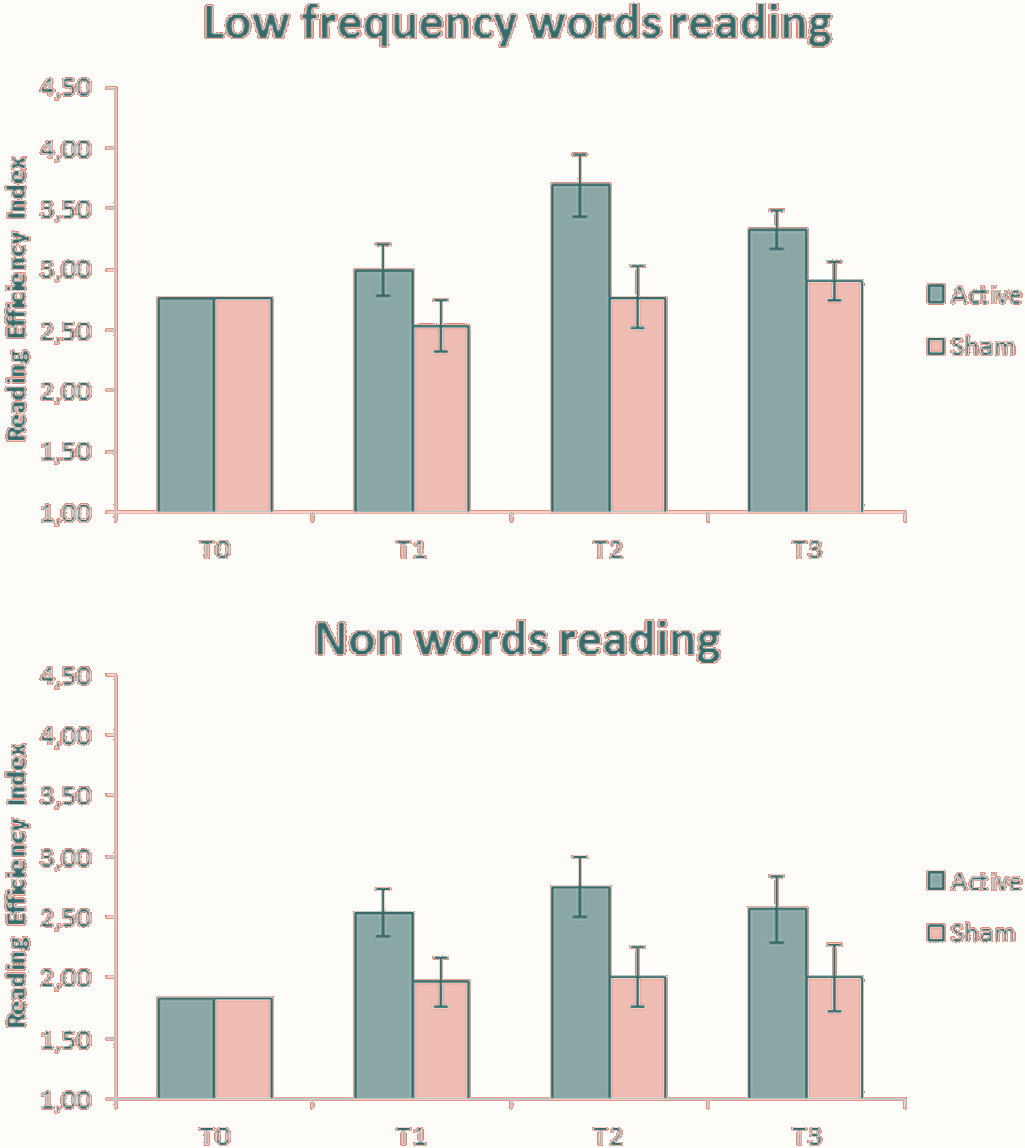
Independent university and hospital labs have already done the foundational work: 11 published studies (225 participants) have tested tDCS for dyslexia (Constantino et al. 2025), led by Dr. Floriana Costanzo’s group at Bambino Gesù Children’s Hospital in Rome (Costanzo et al. 2016, 2019; see also Rahimi et al. 2022). NeuroLingo replicates the exact bilateral temporo-parietal montage (left anode at P7/TP7, right cathode at P8/TP8), 5 × 5 cm (25 cm²) saline pad size, 1.0 mA dose, and 20-minute session length of Costanzo et al. (2016, 2019). Until now, running that protocol required a clinical research stimulator, rubber straps, and manual 10–20 scalp measurements in a lab. We built NeuroLingo so families can use that exact montage at home today, while our own research at General Neuro picks up where the hospital labs left off: testing how to best pair stimulation with structured reading instruction.
Is it safe?
Stimulation at this level has been used in research and medicine for more than twenty years and in thousands of sessions with children, with no serious adverse events reported in systematic reviews (Bikson et al. 2016; Buchanan et al. 2021). Side effects are mild: the tingle, and sometimes redness under the pads that fades within minutes. The headband is set to the 1.0 mA current used in pediatric reading research, ramps up and down gently, pauses automatically if a pad loses contact, and shuts off after 20 minutes with a daily lockout.
What are the technical specifications?
NeuroLingo replicates the exact bilateral temporo-parietal montage of the Costanzo group (Costanzo et al. 2016, 2019), with our patent-pending electrode positioning system. Two single-use 5 × 5 cm (25 cm²) saline sponge pads sit over the left (P7/TP7, anode) and right (P8/TP8, cathode) reading regions. Each session ramps up over 30 seconds to a regulated 1.0 mA direct current (0.04 mA/cm² current density), runs for 20 minutes, and ramps down over 30 seconds before shutting off automatically, with an on-device daily lockout restricting use to one session per day.
Continuous closed-loop impedance monitoring checks pad-to-scalp contact throughout the session: if a pad lifts or begins to dry out, the headband automatically ramps current down to 0 mA, pauses the timer, and alerts you with a light and vibration cue until contact is restored. The headband uses a custom-sized nylon/PLA frame, closed-cell foam padding, medical-grade biocompatible silicone holders, and conductive carbon electrodes; it runs on an internal rechargeable lithium-ion battery with a hardware and firmware interlock that blocks stimulation whenever a USB charging cable is plugged in, uses FCC Part 15 pre-certified wireless modules, and is engineered to LOTES-2023 (Bikson et al. 2023) and IEC 60601-1 / 60601-2-10 medical electrical safety design standards to deliver the optimal stimulation at home and in our IRB-overseen trials.
What does it feel like?
A light tingle under the pads for the first few minutes, then most children stop noticing it.
How does sizing work?
Every headband is custom-sized to your child’s head measurement so the pads sit over the right spots every session without straps to adjust. After you reserve, we email you a one-minute step to measure at home before we build yours.
Can I return it?
Yes. Every reservation and order is refundable in full until the day it ships, and after delivery you have a 90-day money-back guarantee to try it alongside your child’s reading practice and return it for a full refund if you’re not happy with it.
When does it ship?
We build headbands in batches every two weeks. Reserve by Nov 10 for the next batch and we’ll email you a link to order right away. Order by Dec 1 and it ships by Dec 15. Arrives before the holidays (US). If you don’t order in time, we’ll ask whether you’d like to move to the next batch or get your $25 back.
Is it a medical device?
No, and no prescription is needed. NeuroLingo is sold as a reading-practice aid and is not intended to diagnose, treat, cure or prevent any disease or condition.
Can my child’s tutor be involved?
Yes, and we would like them to be! Have them (or you) email us at info@generalneuro.com to tell us about the reading instruction they are doing: we are always happy to talk through with families the best way to get the most out of their sessions. We also want to hear what programs you’re working with! Tutors and teachers who serve low-income students can also apply for free headbands.
Do you ship to my country?
The United States, Canada, the United Kingdom and Australia. Send us an email at info@generalneuro.com if you’re interested but outside these locations. Local taxes and duties are shown at checkout.